
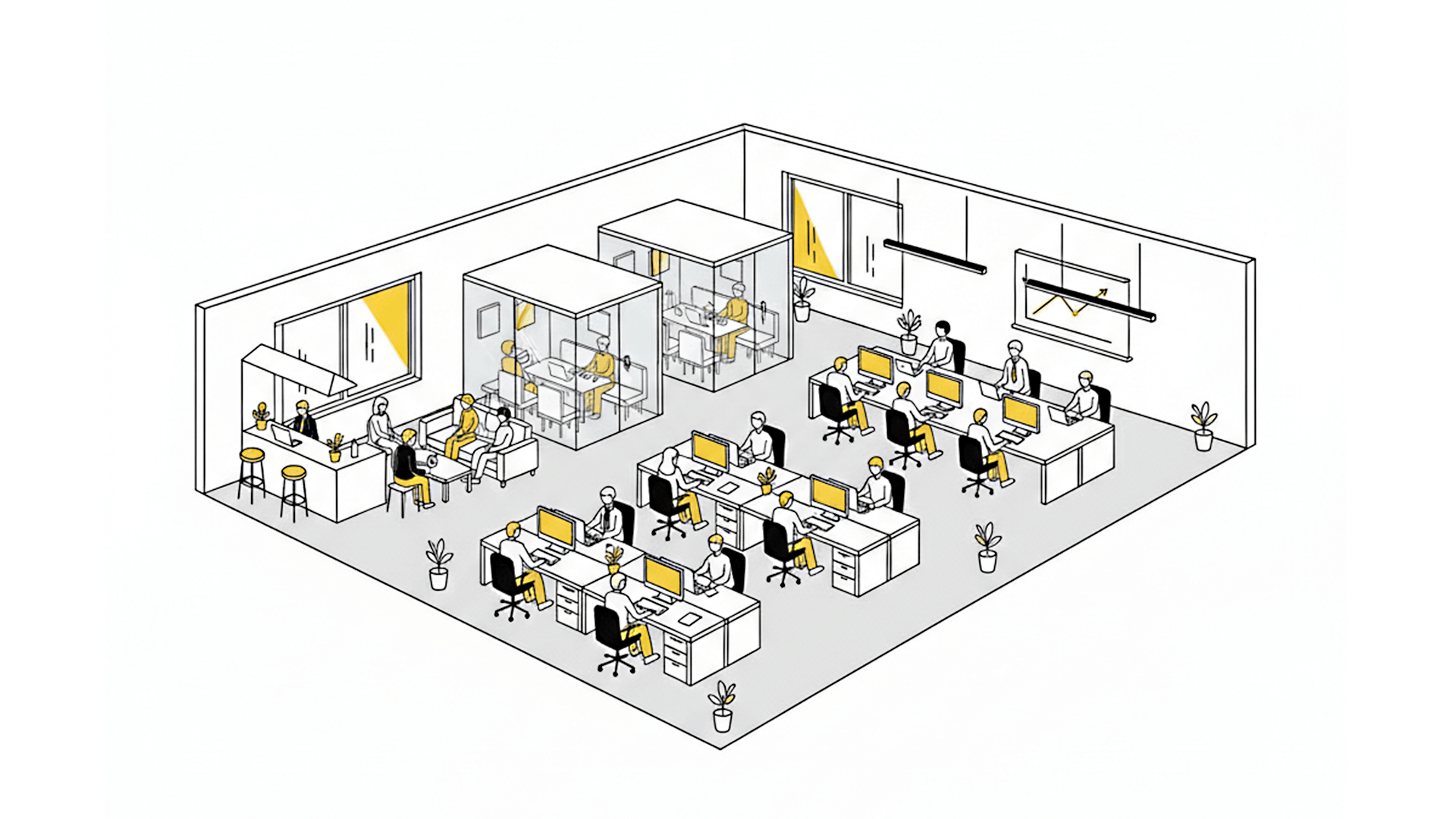
A UK construction business faced requests for more desk space while parts of its existing offices were underused. It needed to balance workplace demand with real-estate costs and the prospect of further investment in overflow offices.
Establishing how existing space was used
The business began with Observe. OpenSensors deployed 650 sensors across desks, collaboration areas and shared zones, giving the facilities team visibility of usage patterns across departments and at different times of the day and week.
This helped the team understand where space was heavily used, where capacity was available and how desk requests related to actual patterns of work.
The analysis showed differences in departmental mobility and in the times when particular spaces were busy. Those patterns gave the facilities team a more specific basis for handling desk requests and planning with department leaders. Available capacity could be considered alongside the needs of the teams asking for additional space.
The solution included a dashboard and automated reports, supported by a LoRaWAN sensing network outside the customer’s IT infrastructure. The sensors collected occupancy information without collecting personal information. Facilities could follow how desks and shared areas were used over time and identify where a change to the workplace deserved closer examination.
Increasing desk sharing and supporting day-to-day use
The facilities team adapted underused areas and used the evidence to plan with departmental leaders. Reconfiguration helped avoid additional investment in overflow offices.
The business increased desk sharing, accommodating more people per desk, then introduced Orbit to help manage the shared workplace. Measurement informed the change; booking supported its day-to-day operation.
Introducing Orbit made the shared-space decision part of the way employees used the office. The project brings together two related tasks: understanding the capacity available and providing a booking tool to help people use it. That connection matters when a business changes from allocated desks to a more flexible workplace.
Today, Orbit allows employees to find and book desks and rooms, while workplace teams manage the associated policies and permissions. Combining booking information with Observe also allows teams to compare planned use with measured use. This provides a basis for reviewing the arrangement as attendance and workplace needs change.
Considering consolidation or additional space?
Our guide to reducing the real-estate footprint sets out questions to consider. Today, Observe supports measurement and Tessellate helps explore possible changes, trade-offs and risks using occupancy evidence alongside the wider business context.