
Executive guides
-
Choosing workplace sensors: occupancy, air quality and noise
Explore how occupancy, air quality and noise sensors can help organisations understand workplace use, improve employee environments and make better space decisions. Learn More

-
Designing future workplaces
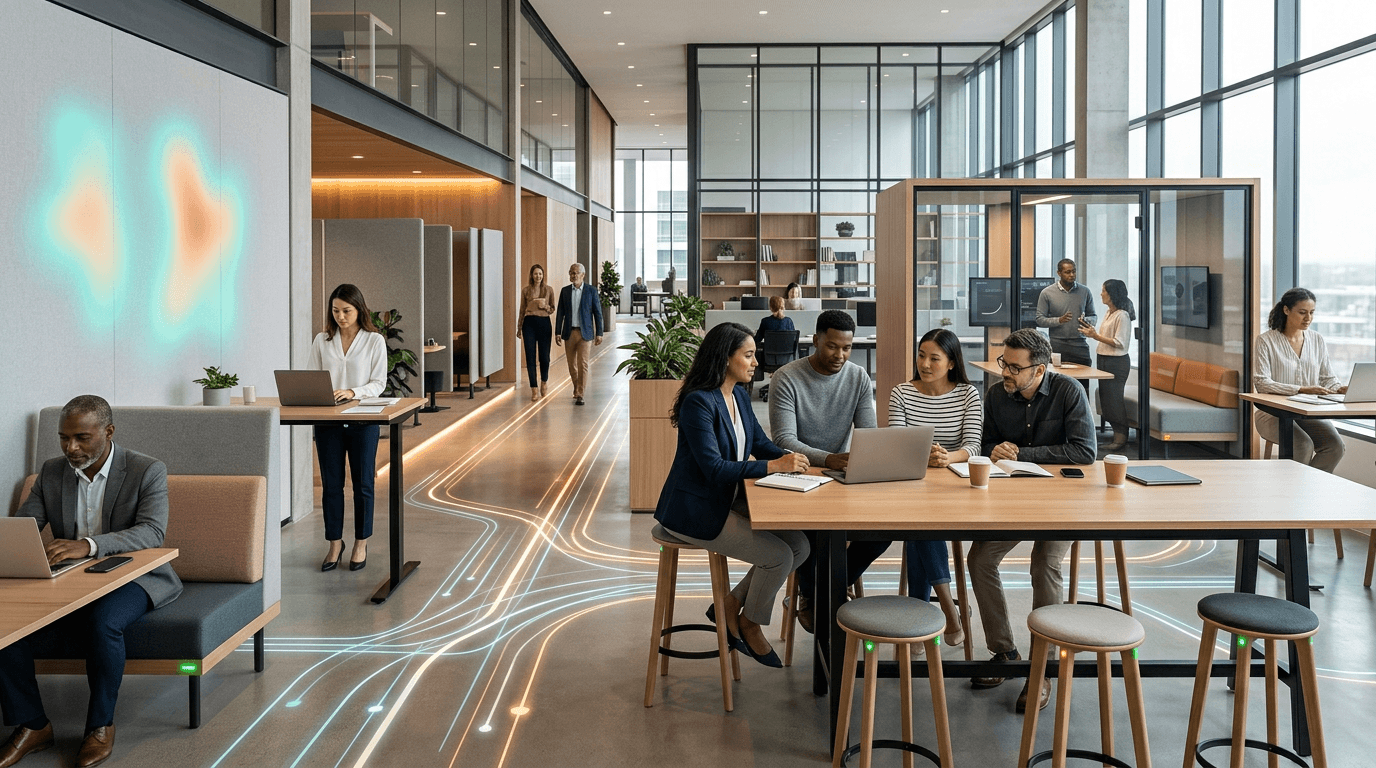
Designing future ready workplaces requires behavioural evidence and scenario modelling to create adaptable spaces, optimise investment and confidently respond to changing attendance, headcount and business priorities. Learn More
-
Hybrid workplace planning
Hybrid working has changed not only where employees work, but how workplace demand is distributed throughout the week. Many organisations face a familiar paradox: overcrowded offices during peak days alongside significant unused capacity at other times. Learn More

-
Optimising meeting room strategy
Meeting room shortages are often less about the number of rooms and more about how well room supply matches actual demand. By combining booking data, occupancy behaviour and scenario modelling, organisations can optimise room mix, recover unused capacity and make better informed workplace investments. Learn More

-
Reducing real estate footprint
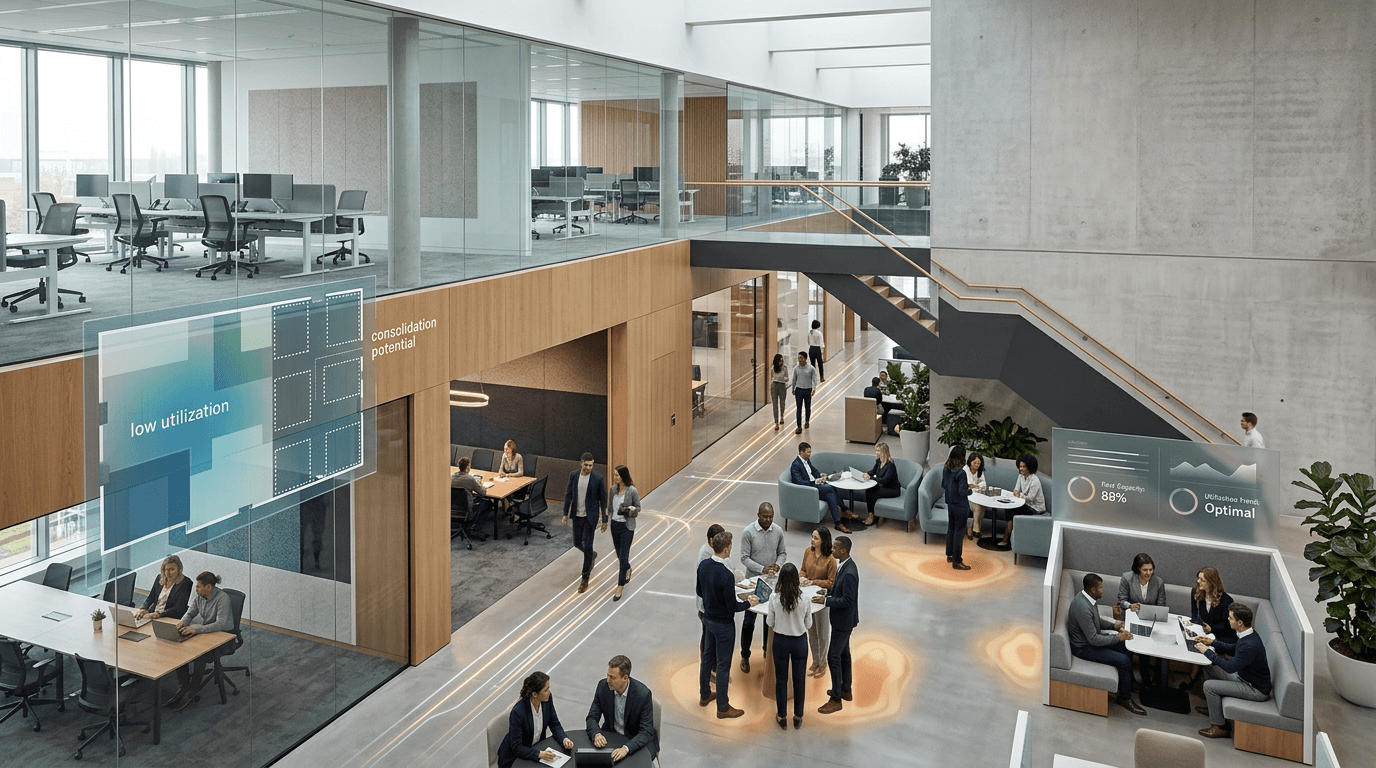
Reducing real estate footprint can unlock significant financial and environmental value, but cutting space without understanding peak demand can create new operational risks. Workplace data and scenario modelling help organisations identify genuine opportunities while protecting employee experience and future capacity. Learn More
-
Compare desk utilisation rates
Compare desk utilisation data by team, department, floor or locations across any time, day, or month. Learn More
