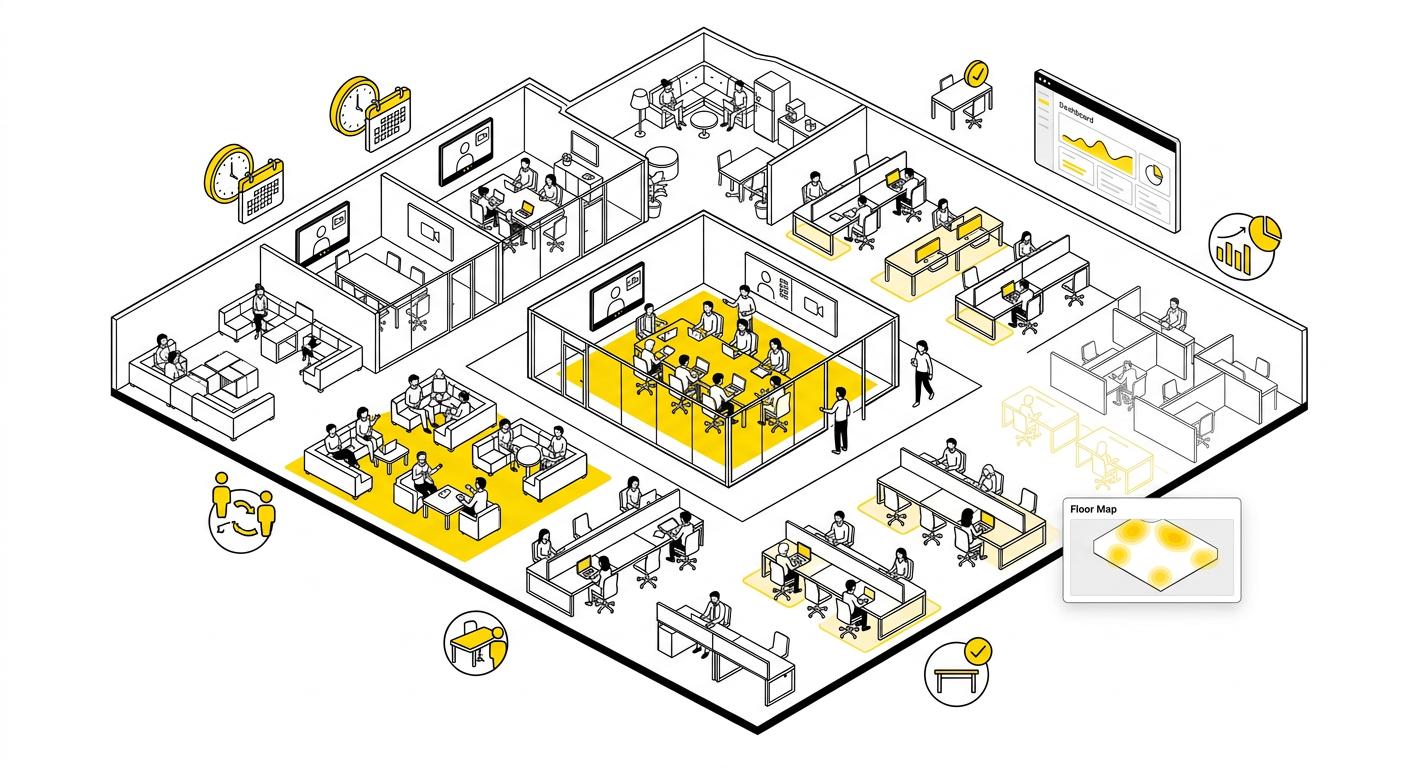
Implementing rotating sensor studies allows an organisation with thousands of workspaces to gather reliable evidence for the handful of decisions that need immediate attention.. The challenge is to gather enough reliable evidence for those decisions, then keep learning as priorities change.
The University of Chicago Biological Sciences Division offers a practical example. In its CoreNet Global conversation with OpenSensors, the facilities team describes a reusable pool of sensors moving through departments in rolling studies. The programme supports a sequence of space decisions while allowing the same equipment to be used again.
A reusable pool, with a purpose for each study
The division manages roughly 6,000–7,000 seats. Installing sensors permanently across every position would have been financially limiting. Instead, the team developed a programme of three-month studies, generally deploying around 200–300 sensors at a time.
At the time of the recording, the team reported approximately 500 active sensors and more than 2,500 cumulative sensor deployments across over 30 departments or sections. Cumulative deployments include equipment being reused; they do not mean 2,500 sensors were operating simultaneously.
The next area to study followed a need: a request for investment, demand for additional space or a location with strategic importance. That connection gave each deployment a purpose and a route into planning.
For estates teams considering this approach, the first questions are practical. Which decision is coming next? Who will use the findings? What must be measured? And what can be changed when the study is complete? The answers shape both the sensor allocation and the study timetable.
Measure, Model, Transform
OpenSensors’ Vu Nguyen explains how this work informed the Measure, Model, Transform framework, or MMT. It provides a repeatable way to connect evidence gathering with action.
Measure: establish how space is used and what the organisation already knows. Useful floor plans, scheduling information and other records can provide context. Where reliable utilisation evidence is missing, deploy sensors suited to the question and space.
Model: test possible changes against that evidence and future requirements. Could a department absorb growth? Could teams share a floor? Would a consolidation still work on the busiest days? Compare assumptions, constraints and risks before selecting an option.
Transform: implement the agreed change and define how to review its effect. Equipment that is no longer required for the completed study can move to another priority area. Evidence
gathering can therefore continue while the first department works through planning or refurbishment.
The sequencing matters. A reusable sensor pool needs an agreed queue of decisions, a deployment plan and time for people to interpret the results. Moving equipment by itself does not create a decision programme.
An earlier discussion point within a three-month study
One of the most useful observations in the conversation concerns timing. The facilities team found that patterns in many of its studies became more consistent after approximately 40–45 days. This allowed planning conversations to begin earlier.
The team was still retaining the three-month study window. It was using the earlier evidence to start discussions while measurement continued. The observation is specific to those studies; it does not establish that every office can be understood in 45 days.
A sensible review point considers the working calendar, holidays, exceptional events and whether busy periods have been captured. A department with seasonal activity may require a different window. The decision also matters: an exploratory layout discussion can begin with less certainty than an irreversible property commitment.
For customers, this creates a practical way to make progress. Agree an interim review when scoping the study. Use it to challenge assumptions, identify missing context and prepare options. Keep collecting evidence for the agreed period and resolve important uncertainties before committing.
Plan the work around the devices
The Chicago discussion also makes clear that deployment takes preparation. Accurate room inventories, furniture locations and device mapping matter. The team described validating information on site and improving its space records as part of that work.
Reusing equipment also requires relocation effort and clear ownership. Some sensors may need to remain where ongoing booking or operational functions depend on them. Others can form the next study pool. Those requirements should be agreed before treating all equipment as available to move.
Communication deserves the same attention. People should understand the purpose of a study, what is being measured and how findings will be discussed. The programme’s experience showed how quickly trust could be damaged when a department had not explained the installation in advance.
Close the loop after the change
The facilities team described plans to revisit consolidated departments to understand the outcome. That is an important next step: a successful installation or a completed report does not establish that the new arrangement is working.
A repeat study can test whether capacity remains sufficient, whether pressure has shifted elsewhere and whether people are using the intended spaces. It can also improve the assumptions used for the next department.
If your estate has several decisions approaching, start by identifying the first one that can change. We can help design a rolling programme with appropriate measurement windows, review points and a clear purpose for each move of the sensor pool.